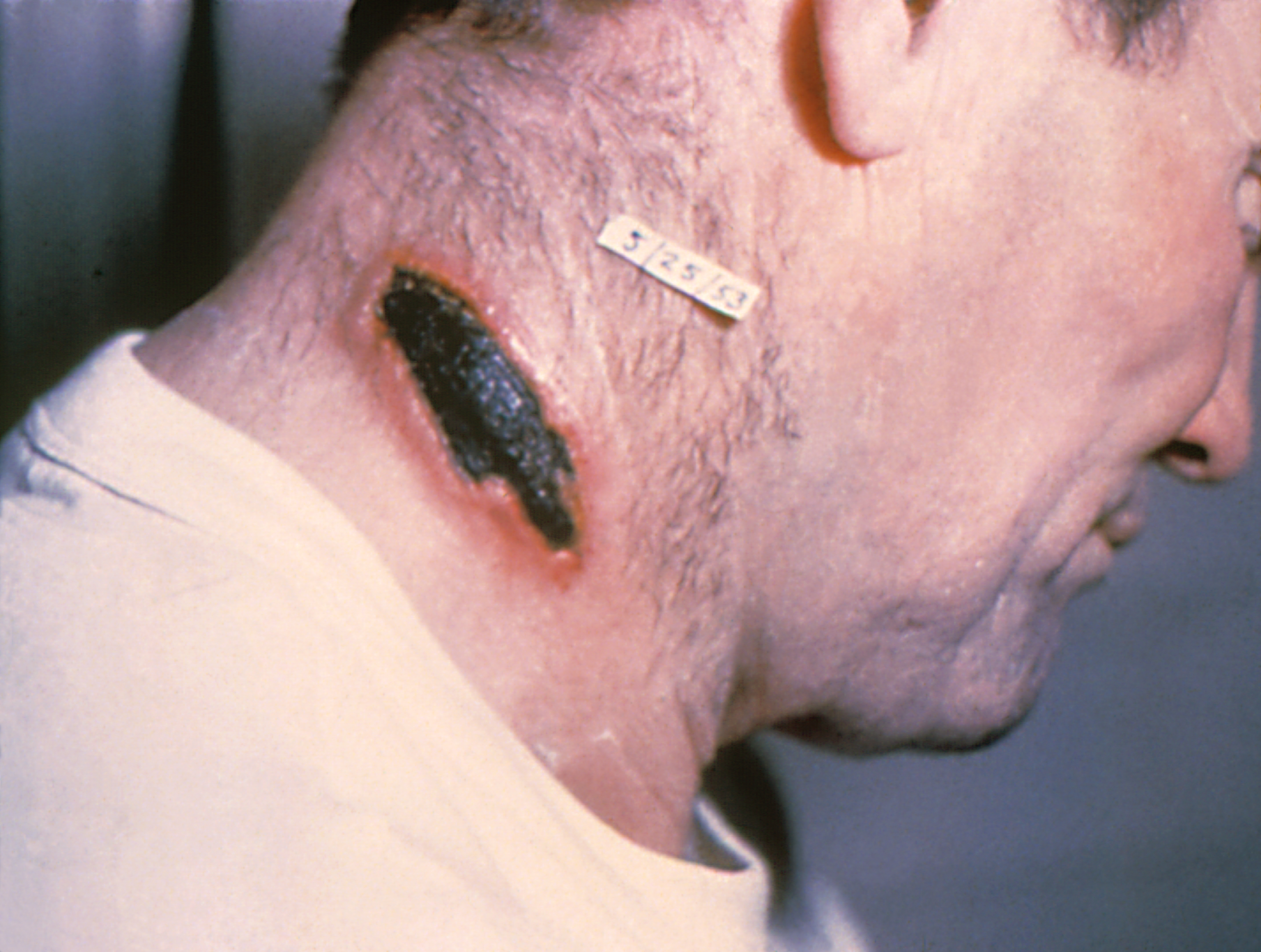
In April 2025, in Pirgachha upazila of Rangpur district, a man slaughtered a sick cow. He had a cut on his finger. Days later the skin around the cut blackened into the eschar that is anthrax's signature. Within months the northern districts were reporting case after case, and the Institute of Epidemiology, Disease Control and Research was calling Rangpur a new location for a disease Bangladesh has been fighting, on and off, for decades.
One correction before the numbers. The brief for this investigation said five states. Bangladesh does not have states, it has divisions, and the documented record for 2024 to 2026 covers three of them: Dhaka, Rangpur and Khulna. That is what the evidence supports. This piece will not invent two more.
Three clusters, one pattern
| Period | Division: districts | Human cases | Livestock | Deaths |
|---|---|---|---|---|
| Apr to May 2024 | Dhaka: Gazipur | 5 confirmed + 1 probable, all cutaneous | 1 cow slaughtered | 1, cause unconfirmed |
| Apr to Oct 2025 | Rangpur: Rangpur, Gaibandha | 50 to 200+ suspected; 8 to 17 confirmed (sources differ) | 100 to 200+ cattle and goats dead (press and farmer estimates; the DLS official count is lower) | 2 to 3 suspected, none lab-confirmed |
| 2025 | Khulna: Meherpur, Kushtia, Satkhira | About 464 in Meherpur, 97% in Gangni (single-sourced) | Not reported | None reported |
Gazipur, April to May 2024. Six people slaughtered one sick cow on 21 April and shared the meat with neighbours. IEDCR's field epidemiologists and the Department of Livestock Services ran a joint One Health investigation. Five cases confirmed by RT-PCR, one probable, every one of them the cutaneous form. The attack rate among those who slaughtered or processed the animal was 83 percent. All recovered on antibiotics. A 45-year-old diabetic man died on 29 April, but no sample was collected and heavy pesticide exposure was also suspected, so IEDCR could not confirm anthrax as the cause. It was Gazipur's first ever reported cluster. Ring vaccination followed, and no new case appeared in the 60-day follow-up.
Rangpur, April to October 2025. The first patient appeared in Pirgachha in April. By July the unions of Pirgachha Sadar, Tambulpur, Chhawla and Parul were reporting spreading symptoms, and residents said the signs had been visible for two months before the official response arrived. The wave peaked between July and October across Pirgachha, Kaunia, Mithapukur, Gangachara and Pirganj upazilas of Rangpur district, then crossed into Sundarganj upazila of Gaibandha. IEDCR confirmed 8 of 12 samples positive on 29 September; later tallies reached 17 of 23 suspected, and the civil surgeon's office at one point reported 13 of 18. Press estimates of suspected cases ran from 50 to more than 200. Livestock deaths ran from the DLS official figure of 25 dead in four upazilas, to farmer estimates above 100 in Pirgachha alone, to a peer-reviewed synthesis citing more than 200 cattle and goats. Take every one of these numbers as a range, not a fact. The one number that held across sources: every human case was cutaneous. None was gastrointestinal, none inhalational.
Meherpur, 2025. The southwestern wave centered on Gangni upazila, with cases also in Kushtia and Satkhira. Local doctors put the 2025 Meherpur figure at 464 cases, 97 percent of them in Gangni, with about 20 new diagnoses a month. That figure is single-sourced and should be read as such. No livestock death figure and no human death was reported for this wave. Note the history: IEDCR's own surveillance page shows Gangni has been the country's anthrax hotspot for years, with 655 suspected cases in 2023 alone. Rangpur was the new front. Gangni was the old one, still burning.
The deaths that were never confirmed
This is the part of the story where precision matters most. Across 2024 to 2026, no human death from anthrax in Bangladesh was ever lab-confirmed. Four deaths were attributed to anthrax in the press or by local officials, and every one of them carries a caveat.
In Gazipur, the 45-year-old diabetic man died without a sample being collected; pesticide poisoning was the competing hypothesis. In Pirgachha, Abdur Razzak died on 9 August and Komola Begum on 6 September with anthrax-like symptoms, but IEDCR took no samples before their deaths and could not confirm the cause. The local civil surgeon's office and the upazila health complex publicly called both deaths anthrax-caused; IEDCR would not. The press could not even agree on the victims' ages: Razzak was reported as 38, 45 and 60; Begum as 48, 58, 60 and 70. In Sundarganj, Rozina Begum died on 4 October 2025 at Rangpur Medical College Hospital; IEDCR's director told Prothom Alo her death was from another illness, not anthrax.
The honest reading: a disease with a terrifying reputation produced, in three years of documented Bangladeshi outbreaks, zero confirmed human fatalities. That does not make it harmless. It makes the panic disproportionate to the pathology, and the pathology is still real enough for the people who carried the eschars.
The pattern: a sick cow, a cheap price, a cut hand
Every cluster began the same way. A cow falls sick. The farmer, facing the loss of an animal worth tens of thousands of taka, sells it cheap to a slaughterer rather than reporting it. The slaughterer kills it without veterinary inspection, the meat goes to neighbours or the freezer at a discount, and anyone with a cut on their hands who touches blood, meat or hide gives the spore its entry. In Gazipur the attack rate among slaughterers was 83 percent. In Rangpur, IEDCR found anthrax bacilli in frozen beef. A Bangladesh Agricultural University field team documented a case where splashed blood caused severe eye swelling in a slaughterer.
The case-control science backs the mechanism. A 2024 Frontiers in Public Health study of 365 Bangladeshi cases found the strongest risk factors were a pre-existing cut injury (adjusted odds ratio 19.04), weighing raw meat (5.73), mixing bones and meat (4.64), and merely observing a slaughter (2.86). Not washing hands with soap after handling animals carried an odds ratio of 2.57. This is a disease of poverty and practice, not mystery: broken skin plus infected animal plus no soap.
The response: vaccines by the hundred thousand, gaps by the million
The official response in 2025 was the largest anthrax operation in the country's recent history, and it still fell short of its own targets. The Department of Livestock Services launched mass vaccination in Rangpur on 2 September 2025: 52,487 cattle in Pirgachha, roughly 167,000 across nine Rangpur upazilas, 26,400 in Sundarganj, extended into Kurigram. Thirty-two vaccination teams and thirty-six slaughterhouse inspection teams were deployed. In October the ministry announced a 3-million-dose cattle vaccination plan for Rangpur Division, two million doses for Rangpur and Gaibandha alone, supplied by the Bangladesh Livestock Research Institute. Gangachara's upazila administration banned cattle slaughter without livestock-office clearance. Mobile courts fined violators. IEDCR ran field investigations, RT-PCR confirmation, surveillance strengthening and sample-collection training.
The gaps are documented in the same sources. Gangni upazila, the old hotspot, received only 30,000 vaccine doses against the need. The Financial Express reported most animals in Rangpur still outside vaccination coverage in October, with a district livestock officer saying 50 percent coverage was needed for herd immunity. Field manpower ran at two volunteers per union; in Pirganj, one of four field assistant posts was filled. And the 3-million-dose plan, announced 6 October 2025, has no published progress report as of September 2026. An announced plan is not a delivered plan.
Why it keeps coming back
The biology first. Anthrax spores survive in soil for up to a century, as public health expert Prof Mahmudur Rahman told Prothom Alo. Grazing animals ingest spore-laden soil with young grass. Monsoon flooding and soil disturbance resurface buried spores; field investigations found spores in about 12 percent of soil samples from May to November and none from December to April, a seasonal reactivation after the dry months. A 2026 peer-reviewed perspective in Health Science Reports lists the full recurrence machinery: long-lived spores in alkaline soils, monsoon resurfacing, slaughter of sick animals, weak slaughter-law enforcement, unsafe carcass disposal in fields and rivers, weak field diagnostics, and reactive rather than preventive vaccination.
Then the human part. Brig Gen Mohammad Ahmed Ahsan, principal of Rangpur Army Medical College, wrote that Pirgachha emerging as a hotspot outside the recognized endemic zones was itself a surveillance failure, that centralized diagnosis at IEDCR causes delays, and that emergency vaccination is a symptom of planning failure rather than a strategy. Dr Mushtaq Ahmed of icddr,b told reporters the missing piece is a government compensation scheme: pay farmers for dead or culled animals and they stop selling sick cattle to slaughterers. Without it, the rational choice for a poor farmer is the choice that spreads the disease.
The thesis of this piece, in one line: Bangladesh does not have an anthrax mystery. It has an anthrax economy, and the spore is simply collecting the rent.
2026: quiet, for now
No new anthrax outbreak was found in any source through 23 September 2026. Gavi's VaccinesWork reported in January 2026 that the Rangpur outbreak had been curtailed, with the Pirgachha health complex finding no cases after September 2025. The year's publications on the subject are retrospective: the Wiley perspective, the Army Medical College editorial, a Dinajpur Medical College Journal paper on the 2017 Pabna and Sirajganj outbreak. Absence of evidence is not evidence of absence, but on the available record the disease is dormant and the spore is waiting. It has done this before. Gangni's surveillance numbers show it never really left the southwest.
What to watch
Three observables, stated so they can be proven wrong. First, the 3-million-dose Rangpur vaccination plan: if the livestock ministry does not publish a dated completion report, the October 2025 announcement was crisis communication, not a campaign. Second, the compensation question: if no scheme appears to pay farmers for animals lost to anthrax, the sick-cattle-to-slaughterer pipeline that caused every one of these outbreaks stays open. Third, IEDCR's own anthrax surveillance page, last updated in January 2025: a surveillance system that does not publish its data is a filing cabinet, not a warning system.
The spore survives a hundred years in soil. The question is whether the response survives a single news cycle.
Sources
- IEDCR National Bulletin of Public Health, "Utilizing One-Health Approach to Investigate a Suspected Death From Cutaneous Anthrax Outbreak at Gazipur, Bangladesh, April-May 2024": nbph.iedcr.gov.bd.
- IEDCR portal, Anthrax Surveillance page (updated 14 Jan 2025).
- Hossain et al., "Zoonotic Anthrax Outbreak in Bangladesh: An Urgent Call for an Integrated One Health Control Strategy," Health Science Reports (Wiley), 2026: doi.org/10.1002/hsr2.72240.
- Chowdhury et al., "Risk factors associated with cutaneous anthrax outbreaks in humans in Bangladesh," Frontiers in Public Health, 14 Oct 2024: frontiersin.org.
- Brig Gen Mohammad Ahmed Ahsan, "Anthrax Returns to the North" (editorial), Rangpur Army Medical College Journal, 2026.
- Daily Star, "Two die of anthrax-like symptoms in Rangpur," 15 Sep 2025.
- Daily Star, "Eight people test positive for anthrax in Rangpur," 29 Sep 2025.
- Daily Star, "Anthrax cases spread to Gaibandha," 4 Oct 2025.
- Daily Star, "Anthrax cases reach 17 in Rangpur," Oct 2025.
- bdnews24, "Bangladesh to vaccinate 3mn cattle in Rangpur Division," 6 Oct 2025: bdnews24.com.
- Prothom Alo English, "Health services division a bit concerned over anthrax situation," Oct 2025.
- Dhaka Tribune / UNB, "Anthrax outbreak spreads in Rangpur," Oct 2025.
- Financial Express, "Concern rife as most animals still outside vaccination in Rangpur," Oct 2025.
- Financial Express / BSS, "Govt launches special drive to combat anthrax in N region," 6 Oct 2025.
- New Age, "Anthrax returns: warning from north" (opinion), Oct 2025.
- tob.news, "Anthrax outbreak: Panic spreads across districts, threatens livestock industry," 25 Oct 2025: tob.news.
- Daily New Nation, "Anthrax outbreak spreads across 3 southern districts," Oct 2025.
- Asian Age / UNB, "Gangachara bans cattle slaughter without clearance to curb anthrax," Oct 2025.
- observerbd, "Anthrax spreading in Rangpur," 2 Oct 2025.
- Gavi VaccinesWork, "How Vaccinating Cows in Bangladesh Curtailed a Human Anthrax Outbreak," 19 Jan 2026: gavi.org.
- Photograph: CDC / Public Health Image Library (PHIL 1934), via Wikimedia Commons, public domain.