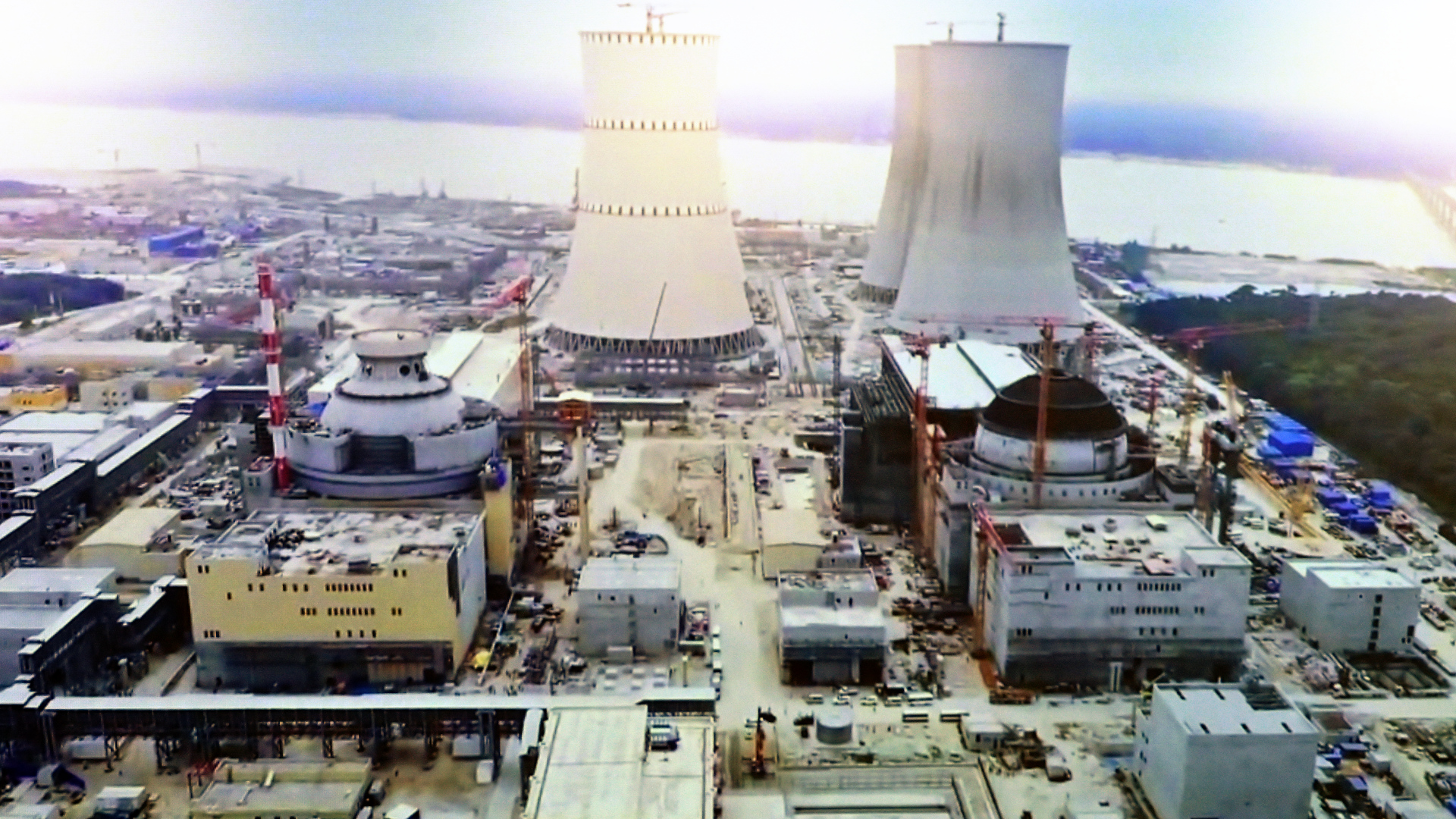
On 25 September, in New York, Rehan Asad, adviser to the prime minister for science and technology, and Jacob Helberg, US under secretary of state for economic growth, energy, and the environment, signed a five-page memorandum of understanding on strategic civil nuclear cooperation. Section 2 of the document reads: "This MOU does not create rights or obligations under domestic or international law." Everything else in the five pages is scaffolding around that sentence. The Daily Star obtained the document, and its 1 October explainer is the fullest public account of what the pages contain. The full text has not been published by either government.
What five pages actually say
Section 1 lists the areas of interest: national security, energy security, and cyber security; collaboration between government agencies, ministries, and regulators; development and implementation of nuclear regulations; building capacity for independent oversight; developing expertise; and maintaining the highest safety, security, and safeguards standards. Read plainly, the MOU is a permission slip for officials, regulators, scientists, and companies on both sides to talk to each other. The Daily Star's own characterization is blunter: the framework was built to provide political cover for those conversations.
Two sub-paragraphs of Section 1 carry the commercial intent. One names new technologies "such as advanced and small modular reactors, and to address commercial challenges such as financing, localization, and nuclear liability." Small modular reactors are prefabricated generating units, typically up to 300 MW against the 1,000 MW-plus of a conventional large reactor, assembled on site rather than custom-built there. The other paragraph states a willingness to "explore cooperation across the breadth of existing and future US civil nuclear technologies, fuel, equipment, and services when appropriate." That sentence raises the Rooppur question directly: would Bangladesh have to buy American uranium pellets for a Russian-built plant? Not by dint of this deal. Section 5 reads, "This MOU in no way restricts the Participants from participating in similar activities with other public or private organizations, agencies, and individuals," and the prime minister's information adviser has stressed that the deal does not affect Rooppur operations.
The safeguards paragraph records the shared position that cooperation follows the highest standards of nuclear safety, security, safeguards, and non-proliferation, and notes that both countries hold IAEA safeguards agreements and Additional Protocols in force and are parties to the Non-Proliferation Treaty. The document runs for five years, renewing automatically for five more unless either side gives six months' notice. And it carries a confidentiality clause: except as national law requires, neither participant discloses the MOU's provisions or implementing documents to third parties without the other's written consent. A secrecy clause inside a non-binding MOU is a signal about where any real negotiation would happen: off-page.
A 1981 precedent, not a first
The preamble recalls the cooperation agreement between Bangladesh and the United States concerning peaceful uses of nuclear energy of 1981. That agreement, signed at Dhaka on 17 September 1981, was itself a 123 agreement under section 123 of the US Atomic Energy Act of 1954. It did not simply expire into obscurity: it was extended by an exchange of diplomatic notes at Dhaka in January and February 1993, and President Clinton transmitted a twenty-year extension to Congress on 21 March 2000, with a Nuclear Proliferation Assessment Statement attached. The channel existed for decades, then lapsed. This MOU restores it.
That makes the "historic breakthrough" framing wrong, and the correction matters. This is inference, stated as such: the restoration is less interesting as novelty than as signal. A government whose only nuclear plant is Russian-built, whose Unit 2 fuel shipment just missed its September window, has chosen to rebuild the American nuclear channel in the same week. Multi-vector nuclear diplomacy, documented in five non-binding pages.
Three hurdles with names
The MOU names financing, localization, and nuclear liability as the commercial challenges to address. These are the deal-breakers in every US reactor export, and naming them is Washington telling Dhaka the price of admission, in writing, before any negotiation.
Financing comes first in the list. The United States government would presumably extend lines of credit; the Export-Import Bank is the usual instrument for American reactor exports, though the MOU names no lender and no figure. For a government that burned through half its annual power and LNG subsidy allocation in two and a half months, financing is the binding constraint on any reactor purchase, American or otherwise.
Localization means the ability to manufacture, maintain, service, and run the facilities with local expertise. Bangladesh has no operating reactor; Rooppur's first unit is still working toward commissioning. The gap between signing a cooperation MOU and staffing an American reactor program is measured in a decade of training pipelines, not document pages.
Nuclear liability is the extent of responsibility when something goes wrong. It must be negotiated later, and it is the clause that kills reactor deals quietly: suppliers do not ship without it, and parliaments do not pass it quickly.
Sentence Manila got and Dhaka did not
The United States launched this MOU program in 2019. A 2021 UN report lists Bulgaria, Ghana, Poland, Romania, and Slovenia as signatories by then. The Philippines signed its version in March 2022, and that text is public. It explicitly states the "intention to open negotiations for a new agreement for peaceful nuclear cooperation concerning civil uses of nuclear energy." Manila's 123 agreement was signed in 2023 and entered into force in July 2024: MOU to 123 in roughly two years.
The Bangladesh text contains no such sentence. It only records the desire to "engage in other forms of civil nuclear cooperation that may be mutually determined by the Participants." The negotiation sentence is the most informative absence in the document. Dhaka took the cooperation framework and left the 123 track uncommitted, preserving full optionality, including the Russian one. Bangladesh is joining a well-worn template, not a bespoke courtship, and it signed the softer version of it. The May 2026 broader energy-sector MOU between the two countries is the predecessor instrument; this text narrows a channel opened five months earlier.
What would convert paper into reactors
Four observables, stated so they can be proven wrong. First, a 123 negotiation announcement: the missing sentence appearing in a joint statement. Second, a named financing line, EXIM or DFC, with a dollar figure attached to a reactor project. Third, movement inside Bangladesh on nuclear liability legislation or SMR licensing by the Atomic Energy Commission. Fourth, a named second site. If twelve months pass with no 123 talks and no financing line, classify this as diplomatic signaling and move on. Paper that never prices is posture.
Sources
- The Daily Star, "Inside the nuclear deal between US and Bangladesh," 1 Oct 2026 (explainer; obtained the five-page MOU).
- The Daily Star, "Bangladesh, US sign civil nuclear cooperation deal," 26 Sep 2026.
- The Hindu, "Bangladesh, U.S. sign MoU on strategic civil nuclear cooperation," 26 Sep 2026.
- PTI via ETV Bharat and CNBC-TV18, 26 Sep 2026.
- GovInfo, CDOC-106hdoc213: presidential message transmitting the US-Bangladesh 123 extension, 21 Mar 2000.
- US State Department FOIA reading room, Case Act report on qualifying nonbinding instruments, 30 May 2025 (program context; lists the El Salvador strategic civil nuclear MOU of 3 Feb 2025).