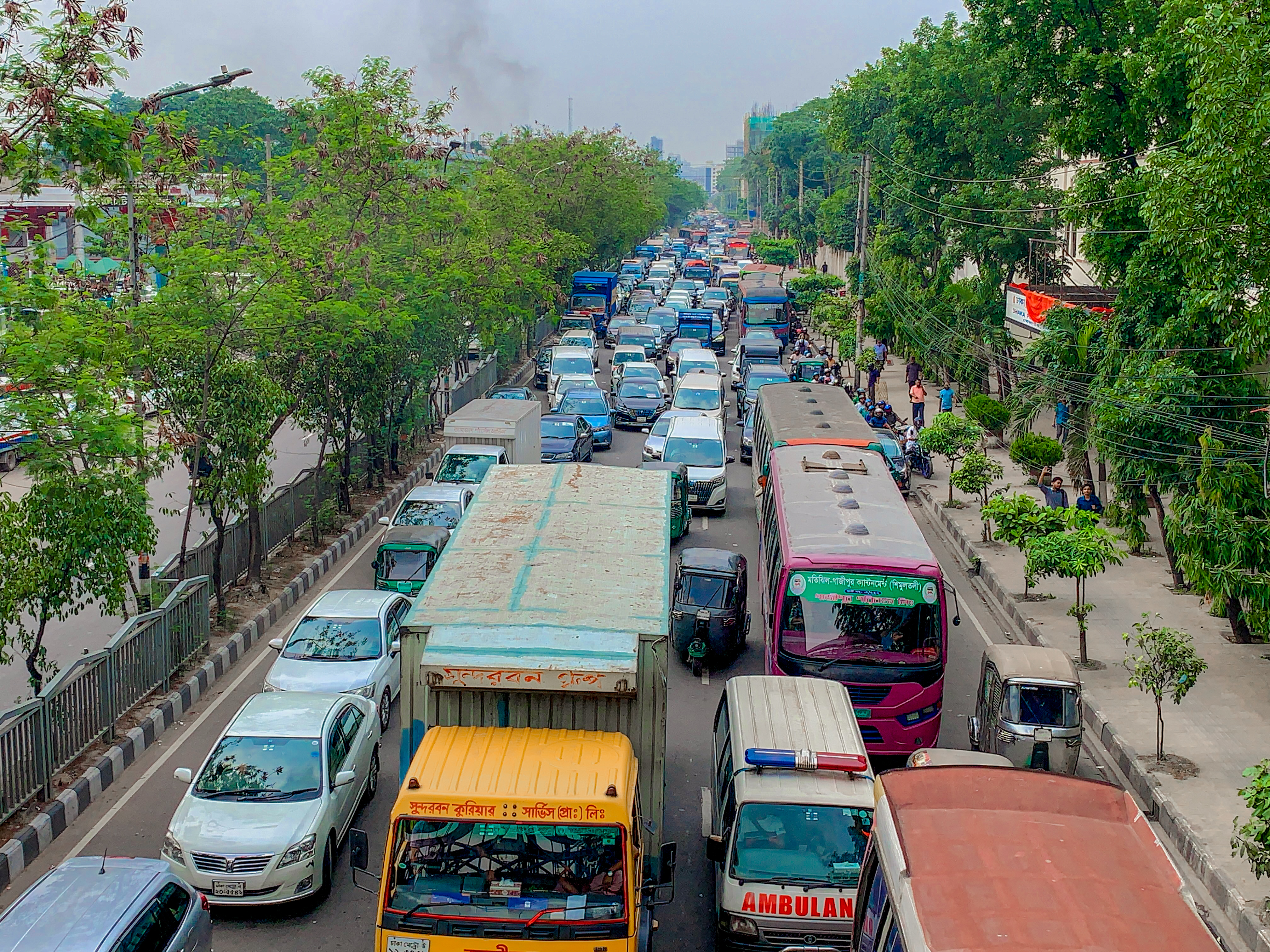
Bangladesh Bank kept its repo rate at 9.5% in its first quarterly statement for October-December, unveiled on September 30 by Deputy Governor Habibur Rahman. The warning underneath the hold is fiscal: the recent Tk20-a-litre fuel hike and the partial new pay scale threaten to push transport and production costs back up. That warning comes even as headline inflation cooled to 8.26% in August, a 10-month low, while non-food prices still ran at 9.32%.
Read the sentence again
Buried in the statement is the line the rate decision exists to protect: "monetary policy alone cannot address the supply-side constraints weighing on growth." Read it plainly.
The central bank just told the fiscal authority that the 7.5 percent year-end inflation target is not achievable with its tools. A repo rate cannot un-raise an administered fuel price. It cannot un-announce a pay scale. It cannot fix energy shortages, infrastructure constraints, or demand uncertainty, all named in the statement as drags on growth. The hold at 9.5 percent is a defensive crouch: keep expectations anchored while the government does the spending and the price-setting that actually moves the index.
Fiscal half of the contradiction
The same statement acknowledges a Tk60,000 crore stimulus package, including Tk20,000 crore to reopen closed factories, as the expected support for recovery. So the posture is this: tight money from the central bank, expansionary spending from the government, administered price hikes from the same government, and an inflation target the bank is supposed to hit with one hand tied. It is not sabotage; it is incoherence. The fuel hike was a fiscal decision, to cut the subsidy bill. The pay scale is a fiscal decision, to hold the civil service together. Both land on prices. The bank holds the rate and absorbs the blame if the target slips.
Numbers behind the crouch
Real GDP growth is estimated at 4.14 percent for FY2025-26, with third-quarter growth at 2.2 percent and industrial production contracting 0.28 percent. Private-sector credit grew 4.75 percent in August, which is what weak investment demand looks like, and the banking sector's non-performing loan ratio hit 32.78 percent in June, which is what borrower distress looks like. The central bank prescribed restructuring, governance, and capital restoration, which is what a regulator says when the clean-up will take years.
Remittances rose 18.9 percent in the first two months of FY27, the one line of relief. The World Bank projects 4.6 percent growth; the IMF cut its forecast to 3.5 percent from 4.3. And the governor did not show up to defend any of it. Deputy Governor Habibur Rahman presented the statement alone, the second framework of Mostaqur Rahman's tenure since February. The governor was absent and took no questions.
What would prove this wrong
An essay is an argument, so here is the argument's kill condition. If the pay scale stalls in partial implementation, if the fuel pass-through is absorbed without lifting transport costs far, and if non-food inflation drifts down toward 7 percent by December, then the admission reads as caution and the hold reads as prudence. But if the headline pushes back above 9 percent on transport costs the bank named in advance, then the sentence was not caution. It was a forecast, delivered in the passive voice, by an institution that had run out of instruments and said so.
Sources
- The Business Standard, "New pay scale, fuel prices compound inflation risks: Bangladesh Bank," 30 Sep 2026.
- bdnews24, "Civil service pay rises risk driving up inflation, Bangladesh Bank warns," 1 Oct 2026.