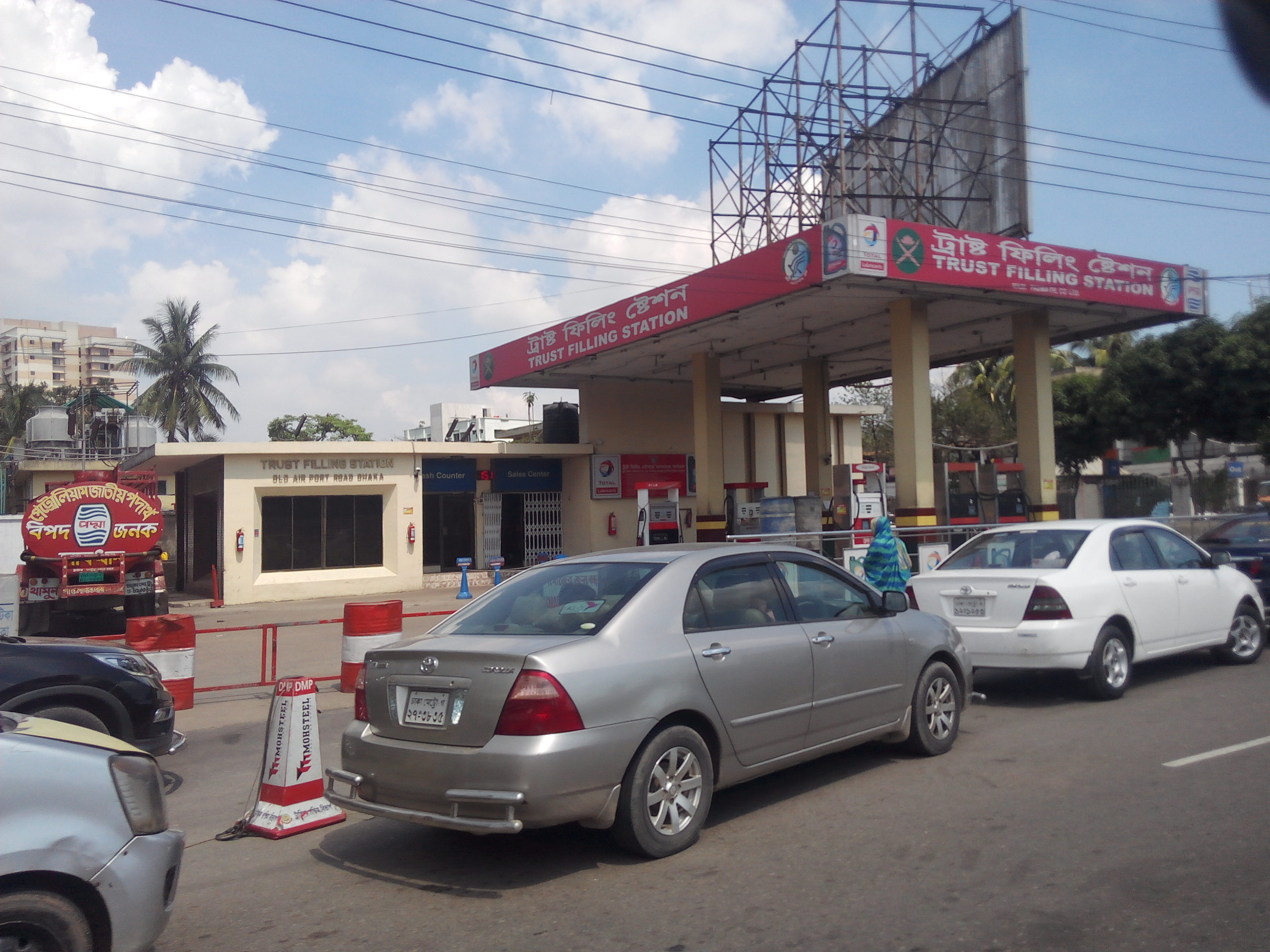
On the night of 21 September 2026, the Energy and Mineral Resources Division raised the price of every fuel sold in Bangladesh by Tk20 a litre. Diesel went from Tk115 to Tk135, kerosene from Tk135 to Tk155, petrol from Tk140 to Tk160, octane from Tk145 to Tk165. It was the second increase in five months, after a Tk15 diesel hike in April, bringing the cumulative rise to Tk35 a litre in under half a year.
The state minister for power, energy and mineral resources, Anindya Islam Amit, gave three reasons at his Secretariat briefing the next day: the Middle East crisis, the smuggling of cheap Bangladeshi fuel into neighbouring countries, and the protection of social safety-net programmes. The first two are real. The third inverts what is actually happening. And none of the three is the reason the hike was unavoidable. The reason is a number: Tk22,875.66 crore.
The freeze
Bangladesh prices fuel through an automatic pricing mechanism introduced in 2024, which is supposed to move domestic prices with international ones. In practice, the government held every price flat for five months, from April through August, while international fuel prices more than doubled after the Middle East conflict escalated in March. Freight charges and marine insurance premiums rose alongside crude. The Division's own notification says so plainly.
The cost of that freeze landed on one balance sheet. The Bangladesh Petroleum Corporation lost Tk22,875.66 crore between March and August 2026, an average of about Tk3,813 crore a month. On diesel alone, the corporation was losing roughly Tk90 a litre before the adjustment, a daily deficit of about Tk109 crore. Held at that rate, diesel alone would have cost Tk40,000 crore a year in subsidy; all petroleum products together, around Tk50,000 crore a year. In August, BPC asked the government for more than Tk18,699 crore in subsidies in a single month. That request is the tell. It is what a state oil company files when it is approaching a wall.
Bangladesh imports around 7 million tonnes of petroleum products a year, of which about 4.5 million tonnes is diesel. Diesel is the lifeblood fuel: public transport, freight, irrigation pumps. When the minister says the international cost of diesel is Tk205 a litre, that number is doing most of the work in this story.
| Fuel | Before (Tk/litre) | After (Tk/litre) | Change |
|---|---|---|---|
| Diesel | 115 | 135 | +20 |
| Kerosene | 135 | 155 | +20 |
| Petrol | 140 | 160 | +20 |
| Octane | 145 | 165 | +20 |
The arithmetic that remains
Here is the part the briefing did not dwell on. Even after the Tk20 increase, diesel at Tk135 a litre sits Tk70 below the minister's own Tk205 international cost figure. The corporation keeps subsidizing roughly Tk70 on every litre of diesel it sells. The government estimates this hike cuts BPC's annual loss by about Tk10,000 crore. Annualize the six-month bleed and you get roughly Tk45,750 crore a year. A Tk10,000 crore fix against a Tk45,750 crore run rate is not a solution. It is a down payment.
That is inference, but it is inference with a short fuse: if international prices do not fall, and BPC's monthly loss stays anywhere near its recent average, another price adjustment is already baked into the arithmetic before year-end. The observable that would prove this wrong is BPC's monthly loss print dropping below roughly Tk2,000 crore and staying there. Watch for it.
Smuggling is the packaging
The minister's smuggling argument is factually grounded. His briefing table put diesel at Tk134.76 a litre in Kolkata, Tk164.83 in Myanmar, Tk161.24 in Nepal, Tk179.42 in Sri Lanka, Tk151.22 in Thailand, Tk137 in Vietnam, Tk168.53 in the Philippines, Tk185.48 in Pakistan, and Tk144.79 in the UAE. Bangladesh had the lowest price in the region, and fuel was leaking across the border to be sold at the higher price next door. That differential made smuggling inevitable.
But smuggling is a border-enforcement problem, and the government is solving it with a national price instrument. Every farmer running an irrigation pump, every bus passenger, every factory paying freight now pays for leakage at the border. And note the distributional detail the uniform Tk20 increase hides: kerosene, the fuel of the poorest households, took exactly the same Tk20 hit as octane, the fuel of private cars. If the purpose were protecting the vulnerable, the instrument would not be flat.
The politics of an apology
The minister apologized. "I entered politics with the intention of easing people's hardships," he said. "I sincerely apologise to the people." Governments seven months into their term do not spend that kind of political capital, on a cumulative Tk35-a-litre increase, unless the fiscal position gave them no room to wait. The apology is itself evidence of how bad the alternative looked from inside the room.
The "social safety net" framing deserves the same scrutiny as the smuggling frame. The minister said continuing the subsidy would disrupt safety-net programmes. But the fuel subsidy was itself a safety net, for transport fares, food prices, and irrigation costs. What is actually happening is a choice between two fiscal holes: the BPC balance sheet or household budgets. The president of the Bangladesh Chamber of Industries, Anwar-ul Alam Chowdhury, has already warned that the hike will feed inflation, raise production and transport costs, and force downsizing and job losses among manufacturers already dealing with energy shortages. That pass-through is the predictable second-order effect, and the government's promise to monitor bus fares is worth tracking against what fares actually do.
What to watch
Three observables, stated so they can be proven wrong. First, BPC's monthly loss: above roughly Tk2,000 crore a month after this hike means the arithmetic still does not close, and a third adjustment follows. Second, transport fares: the ministry promised monitoring to keep increases reasonable; compare that promise against the per-kilometre fare in three months. Third, the LNG line: the ministry cited mounting liquefied natural gas subsidies in the same notification, which means the liquid-fuel crisis and the gas crisis are the same fiscal fire burning from two sides.
The Middle East crisis is the exogenous variable in all of this. The minister called it unprecedented, "taking a new turn almost every day." If it de-escalates, the arithmetic eases and the government gets breathing room it has not earned. If it does not, the Tk70-a-litre diesel subsidy keeps compounding, and the next freeze, if there is one, will cost more than this one did.
Sources
- TBS News, "Fuel prices raised to prevent smuggling to neighbouring country: State minister," 21 Sep 2026.
- Energy Bangla, "Fuel Prices Had to Be Increased Under Compulsion: State Minister for Energy," 21 Sep 2026.
- Dhaka Tribune, "Fuel hikes threaten millions as living costs soar," 21 Sep 2026.
- Daily Sun, "Fuel prices rise amid mounting subsidy burden," 21 Sep 2026.
- Channel News Asia, "Bangladesh raises fuel prices as Middle East conflict drives up costs," 21 Sep 2026 (carrying ANI).
- BDDiGEST, "Fuel Prices Hiked Again: Diesel, Petrol and Octane Prices Rise by Tk 20 a Litre," 21 Sep 2026.