The next IMF programme for Bangladesh has a price tag on the table, $4.0 to $4.5 billion, and a barrier in front of it: the subsidy bill. The Financial Express reports that Finance Division officials see mounting power and energy subsidies as the issue most likely to stall negotiations, with Tk 480 billion allocated for power and LNG subsidies this fiscal year and Tk 238 billion of it already disbursed in the first two and a half months. The lender spent its previous programme pushing Dhaka to cut these subsidies. The current government scrapped that programme months after taking power. Now it is back asking for money, and the number it has to defend got bigger.
Burn rate
The FE figures, attributed to Finance Minister Amir Khosru Mahmud Chowdhury and Finance Division officials: last fiscal year, power and energy subsidy spending surpassed Tk 400 billion, driven by the gap between sourcing costs and selling prices. This fiscal year, the allocation is Tk 370 billion for power subsidy plus Tk 110 billion for LNG, Tk 480 billion combined. Against that, Tk 238 billion disbursed in roughly ten weeks.
Do the division the article does not. Tk 238 billion over 2.5 months is about Tk 95 billion a month. At that pace the full-year Tk 480 billion allocation is exhausted in about five months, around November, with seven months of the fiscal year still to run. That is the arithmetic the IMF team will walk into the Bangkok meetings with. It is also why one official told the FE the heavy spending will continue "until the conflict in the Middle East ends" — the admission, read straight, is that the burn rate is not a policy choice but a hostage to energy prices.
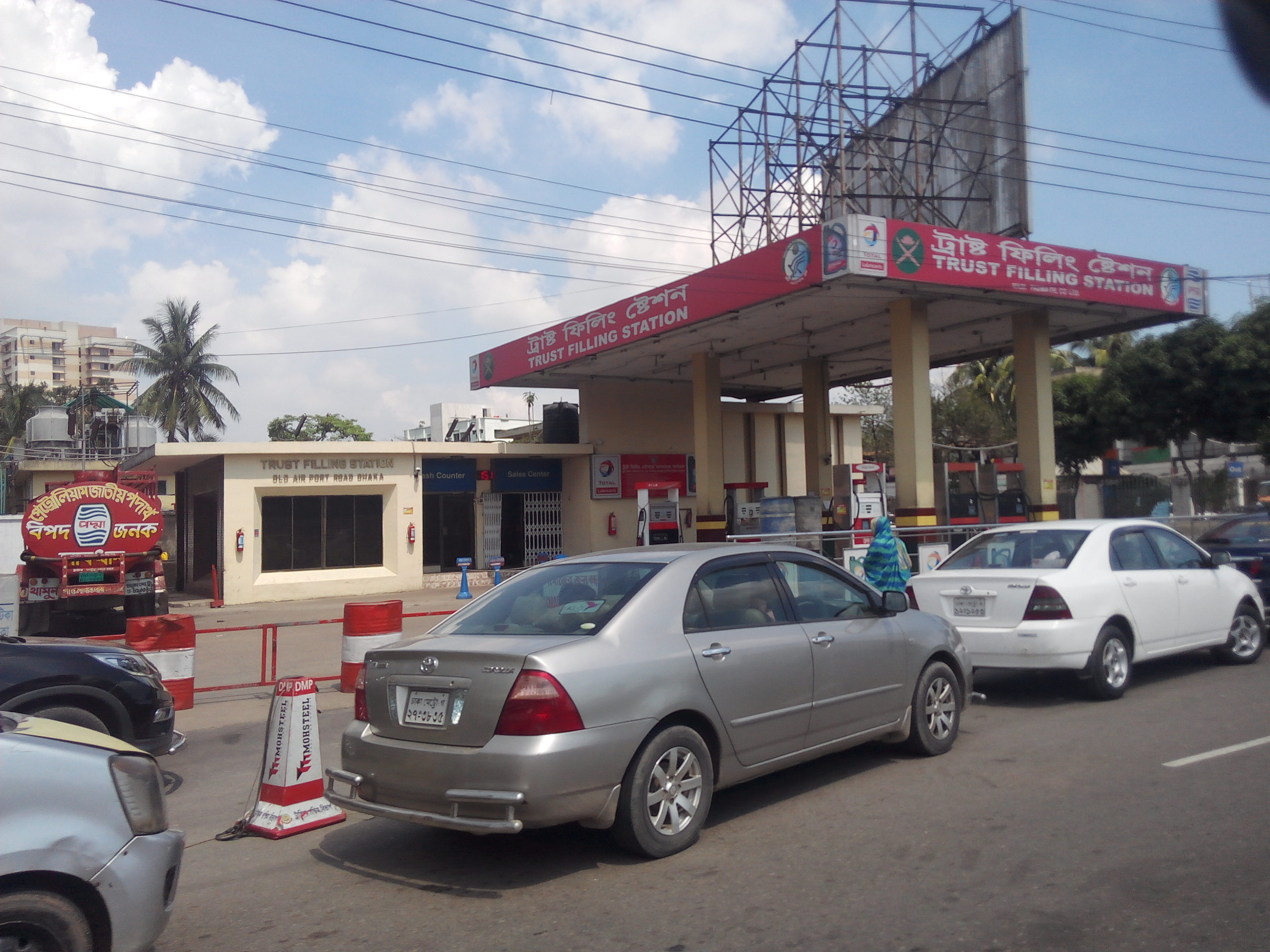
This is analysis, not FE reporting: the disbursement pace cannot be sustained inside the allocation, so either the allocation gets revised upward mid-year, prices rise further, or arrears start building at the Bangladesh Petroleum Corporation and the Power Development Board. The September fuel-price hike — Tk20 a litre across the board, the second increase in five months — was the first move down the second path.
What IMF will demand
In July, an IMF fact-finding team recommended that Dhaka devise a mechanism restricting subsidy benefits to the poor, with affluent consumers paying market rates for power and energy. A senior Finance Division official told the FE what that means in practice:
"The IMF wouldn't accept continuation of such a big subsidy spending under the new credit programme as rich people are also benefited from the same."
The official's forecast: IMF negotiators will push to stop energy and power subsidy spending outright and demand further electricity and fuel-oil price increases.
Against that, the finance minister's own line, given after the July mission: no specific subsidy conditions or details have been discussed yet. "Until now, no specific conditions or details have been discussed. We only discussed the basic fundamentals of the programme." Both can be true at once. The framework stage produced no conditions; the officials preparing the file expect the conditions to land on subsidies first. The gap between the minister's public line and his officials' private forecast is itself worth watching.
Negotiation calendar
The sequence, per the FE and The Daily Star's July reporting: Finance Minister Chowdhury and his team meet IMF top officials on the sidelines of the IMF and World Bank Group annual meetings in Bangkok, in the second week of October. If Dhaka gives the green signal there, an IMF team visits in late October or early November to open formal negotiations. Finance ministry officials told The Daily Star in July that, subject to satisfactory progress, the loan proposal could go before the IMF Board in January 2027.
The current fiscal year's budget, officials say, has already been aligned with the IMF reform programme: a tax-to-GDP ratio target of 9.2 percent and a budget deficit below 4 percent of GDP, against a previous main-budget ceiling of 5 percent.
Why Dhaka wants it
The programme is not only about the money. A senior Finance Division official told the FE the IMF programme is the instrument for forcing banking and revenue reforms that would not otherwise happen:
"Unless an IMF programme is there, the government would not feel the necessity of conducting the reforms."
Revenue generation is not rising to need, and banking-sector reform, the official said, "has not started at all though the IMF pushed severe under the previous programme." The previous programme was $5.5 billion; the current government scrapped it after finding the reform load negotiated by the previous Awami League government not feasible. Under it, the IMF had released $3.595 billion. The new ask is smaller, $4.0 to $4.5 billion, and the reform load is being renegotiated from scratch.
Ledger context
This newsroom has been tracking the same gap from the other side. The FY27 figures board puts capacity payments and plant rentals at Tk 52,608 crore against a Tk 37,000 crore power-subsidy allocation — the FE's Tk 370 billion power figure matches the board's allocation to the crore. The roughly Tk 15,000 crore difference does not vanish; it accumulates as unpaid bills at the Power Development Board, which is where the banking-system transmission this newsroom documented begins.
Read together, the two ledgers say the same thing. The contractual bill for keeping the lights on exceeds what the budget admits, and the subsidy the budget does admit is being disbursed at twice the sustainable pace. The IMF is not discovering a new problem in October. It is arriving to price one Dhaka has been carrying for years.
What to watch
Five observables, stated so they can be proven wrong. First, the Bangkok readout: whether subsidies appear in the official summary of the October meetings, and in what language. Second, the targeting mechanism: the July mission asked for subsidies restricted to the poor; any concrete proposal from Dhaka before the October meetings is the signal the government is pre-negotiating. Third, prices: any further electricity or fuel-oil adjustment between now and the Dhaka mission would show which path — allocation revision, price rise, or arrears — Dhaka chose. Fourth, the Dhaka mission itself: whether it lands in late October or slips, and whether banking reform is on its agenda alongside subsidies. Fifth, the January board date: if the proposal is not before the board by January, the programme has slipped and the subsidy fight is the likeliest reason.
Sources
- The Financial Express, "New $4.0b IMF credit programme for Bangladesh: Mounting power-energy subsidies cited as big barriers," 24 Sep 2026. thefinancialexpress.com.bd
- The Daily Star, "New IMF loan may come next January, say officials," 12 Jul 2026. thedailystar.net
- The Daily Star, "Reforms under IMF programme to be phased in: finance minister," Sep 2026. thedailystar.net
- UNB, "IMF agrees with proposed framework for new programme: Finance Minister," Jul 2026. unb.com.bd
- DARWIN newsroom, "Capacity-Payment Gap: FY27 Figures Board," 22 Sep 2026. article-fy27-capacity-payment-board.html
- DARWIN newsroom, "Five-Month Freeze," 22 Sep 2026. article-fuel-price-hike.html