.jpg)
0. Verdict
Thesis: partially confirmed, with the core pricing claim reversed.
The brief went in hunting a pricing scandal and found the opposite on price: the long-term Brent-slope contracts were the cheap leg of the portfolio from 2022 to 2026, not the expensive one — roughly $9–11/MMBtu against $21–36/MMBtu spot in every documented spike episode, confirmed on the record by a Petrobangla finance official in April 2025.
The evidence supports the structural half of the thesis cleanly: Bangladesh's long-term LNG contracts were negotiated bilaterally, without competitive tender, under a 2010 indemnity law (the Quick Enhancement of Electricity and Energy Supply (Special Provisions) Act) that explicitly suspended the Public Procurement Act for energy deals — and the FSRU terminal deals were awarded the same way. That part of the thesis is confirmed at [E]/[C] tier: it is admitted by officials, documented in the statute itself, and was the interim government's own stated reason for repealing the law in November 2024.
The pricing half is more complicated than "systematic overpayment vs. spot." *The long-term Brent-slope contracts (11.9%–13.5% of Brent + 30–52¢) were, on the balance of the 2022–2026 window, the cheap leg of Bangladesh's LNG portfolio, not the expensive one. In the 2022 price spike and again during the 2025–2026 Hormuz/Ras Laffan disruptions, spot cargoes cleared at $21–36/MMBtu while contract gas held at roughly $9–11/MMBtu — the reverse of the "long-term = overpriced" framing in the original thesis. The scandal the evidence actually documents is different and arguably worse: the procurement process (no bidding, no published evaluation, Special Act immunity) produced a portfolio too small and too fragile to protect Bangladesh from the spot market*, so that when disruptions hit, Bangladesh was forced into exactly the spot exposure the contracts were supposed to shield it from — at prices 2–3x the contract rate, financed by subsidies it could not really afford. The capacity-payment and single-vendor-concentration findings (Section 5) do support a rent-extraction reading, but through a different channel than a hostile Brent slope: idle/underutilized capacity charges, an unsolicited third-terminal award to the same politically connected group that already held the first FSRU concession, and a take-or-pay structure that, while less punishing on paper than assumed (Petrobangla negotiated meaningful downside flex), still left Bangladesh short of genuine competitive price discovery on the marginal cargo.
Strongest evidence for the "extraction via process" thesis: the Summit Group's third-FSRU award, on 30 March 2024, was made "under a special legal provision without competitive bidding" to the same conglomerate already operating one of the two existing terminals — and was cancelled by the interim government on corruption and procedural grounds within months of the government's fall. [C]
Strongest evidence against the "spread" framing as originally specified: in April 2025, a Petrobangla finance official stated on the record that had a supply shock (the Iran–Israel war and Strait of Hormuz disruption) not forced Bangladesh onto the spot market, "most of the LNG cargoes" would have been imported from long-term suppliers at $9–11/MMBtu, versus the ~$21/MMBtu spot cargoes actually purchased that month. [E — Petrobangla official on record]
1. Contract inventory (verified against multiple sourcings; treat unconfirmed cells as [S]/[T])
| Counterparty | Agreement date | Volume (MTPA) | Duration | Formula (as % of 3-mo avg Brent + constant, $/MMBtu) | Take-or-pay floor | Award method | Status (Sep 2026) |
|---|---|---|---|---|---|---|---|
| RasGas (→ QatarEnergy/Qatargas) — "Qatar I" | 25 Sep 2017 | 1.8 rising to 2.5 | 15 yrs from 2018 | 12.65% + $0.50 | 1.8 Mtpa (72% of ceiling); 10-yr flex band | Negotiated, no open tender; under Special Act framework | Active |
| Oman Trading International (→ OQ Trading) — "Oman I" | 6 May 2018 | 1.0 (flex 0.9–1.5) | 10 yrs from 2018 | 11.9% + $0.40 | 0.9 Mtpa | Negotiated, no open tender | Active |
| QatarEnergy — "Qatar II" | June 2023 | up to 1.8 | 15 yrs from Jan 2026 | ~13.20% + constant | Not confirmed [S] | Negotiated bilaterally (PM-level diplomacy, Doha) | Active; lifting begins Jan 2026 |
| OQ Trading — "Oman II" | June 2023 | up to 1.5 | 10 yrs from 2026 | ~13.35% + $0.50 | Not confirmed [S] | Negotiated bilaterally | Active; lifting begins 2026 |
| Excelerate Energy | Nov 2023 | up to 1.0 | 15 yrs from Jan 2026 | ~13.35% + $0.30 | Not confirmed [S] | Negotiated bilaterally | Active; lifting begins Jan 2026 |
| OQ Trading — short-term "strip" deal | Aug 2025 | 17 cargoes (Aug 2025–Dec 2026) | ~17 months | JKM + premium (50¢–$1.50/MMBtu reported market range) | N/A (strip contract) | Negotiated | Active — Bangladesh's first-ever short-term SPA |
| Summit Oil & Shipping Co. Ltd. (SOSCL) | June 2024 | 1.5 | 15 yrs | ~13.35% + $0.29 | Not confirmed [S] | Negotiated | Cancelled (Feb–Apr 2026 reporting places cancellation with the broader FY2026 SPA restructuring) |
| Summit LNG Terminal II Co. (3rd FSRU, terminal only — not a supply SPA) | 30 Mar 2024 (final nod; earlier CCEA in-principle approval) | 600 MMcfd regasification capacity | 15-yr Terminal Use Agreement + Implementation Agreement, fee ~$300,000/day equivalent | N/A | N/A | Unsolicited, awarded under Special Provisions Act, no competitive bidding — to the incumbent operator of Summit's existing FSRU | Cancelled by Petrobangla, 7–8 Oct 2024, citing corruption/procedural concerns; Summit has since (as of Jul–Sep 2026) sought reinstatement and challenged the cancellation in the High Court |
Reconciliation note on the Summit SPA vs. Summit terminal: press sourcing is inconsistent about whether the "cancelled" Summit item is the supply SPA, the terminal deal, or both — Financial Express (Sep 2025 reporting on the 2026 cargo plan) describes a cancelled SPA with Summit Oil & Shipping (1.5 Mtpa, 13.35% + $0.29), while New Age/The Wire describe the cancelled terminal (third FSRU). Both appear to be real and distinct: Petrobangla cancelled the FSRU/terminal deal in October 2024, and separately the 1.5 Mtpa supply SPA tied to that same terminal did not survive into the confirmed 2026 supply stack. [C, but resolve against primary Petrobangla correspondence if available — flagged as a blind spot]
Pre-Special-Act precedent worth noting: the 1990s-era Daewoo production-sharing contract for Bangladesh gas fields was also processed under the 2010 Special Act framework and permitted third-party sale at negotiated prices if Petrobangla declined to buy — an early instance of the same non-competitive template later used for LNG SPAs and FSRUs. [C]
Falsification check on award method: none of the SPAs or terminal deals reviewed here show evidence of an open, multi-bidder competitive tender with published scoring. Every award traces either to direct government-to-government diplomacy (the Qatar and Oman SPAs, explicitly linked in contemporaneous reporting to prime-ministerial visits) or to unsolicited proposals processed under the Special Provisions Act (the FSRUs). This falsifies the "genuinely competitive tenders" condition outright — the thesis component that depends on the award process is not merely unconfirmed, it is affirmatively contradicted by the sourcing.
2. The spread, as the evidence actually shows it
A full monthly reconciliation of contract-implied price vs. JKM spot vs. Petrobangla's actual blended paid price, at daily/monthly resolution for 60 months, was not fully obtainable from open sourcing in this pass — Petrobangla does not appear to publish a clean monthly landed-cost series broken out by contract vs. spot cargo, and third-party LNG price trackers available to this research vary in methodology and reliability for historical JKM (see Source Discipline note below). What the evidence does establish, at [E]/[C] tier, is the shape of the spread and its direction, which runs opposite to the thesis's core hypothesis:
- Contract price band, 2018–2026: roughly $5.50–$11/MMBtu across the life of the Qatar-I/Oman-I contracts, tracking Brent (confirmed at multiple points: ~$5.50–6.00/MMBtu in Oct 2020 when Brent was depressed; ~$11/MMBtu in Dec 2023 when Brent was elevated).
- Spot price band, same window: as low as ~$9/MMBtu in benign periods but spiking to $25–40/MMBtu repeatedly — Oct/Nov 2022 (Bangladesh cancelled spot tenders because bids came in at or above long-term contract levels, i.e., spot was not even cheaper on a like-for-like basis that month); March 2022 Pakistan spot cargo at $25.12/MMBtu (regional comparator); April 2025 Bangladesh spot orders at $21.58–$28/MMBtu; the widely reported spike above $56/MMBtu during the 2021 Asian energy crisis.
- Net effect: in every documented spike episode, Bangladesh's long-term contracts were the protective leg, and the cost damage came from being pushed onto the spot market precisely when spot was most expensive — during supply disruptions (FSRU outages, supplier force majeure, geopolitical shipping risk) that a properly diversified and adequately sized long-term portfolio should have insulated against.
Reframed finding (analysis — triangulated from outage reporting cross-referenced against contemporaneous spot-price reporting, not a documented finding): the "spread" that matters here is not contract-vs-spot in the aggregate — it is the cost of underinsurance. Bangladesh's regasification capacity (~1,053 MMcfd from two aging FSRUs) is "close to saturation" even before accounting for outages, and recent (Jul–Aug 2026) reporting documents repeated FSRU failures — a fire on 21 July 2026, multiple subsequent shutdowns, berthing delays — that forced supply below 2,200 MMcfd against ~3,800 MMcfd of national demand. Each outage event is a forced-spot-purchase event, and Bangladesh paid the "scandal" price not because the contracts were mispriced but because the terminal and portfolio design left no slack to absorb any disruption without recourse to spot. This is consistent with the thesis's spirit (procurement structure → systematic overpayment) but locates the mechanism in capacity/redundancy planning and portfolio sizing, not in the Brent-slope formulas themselves. [T — triangulated from outage reporting + spot price reporting; method: cross-referencing disruption dates against contemporaneous spot-price reporting]
Confidence band: 65–75% that a full monthly reconciliation, if it could be built from Petrobangla's internal cargo-by-cargo ledger (not public), would confirm this direction-of-spread finding; the outside-view base rate for long-term oil-indexed Asian LNG contracts outperforming spot during 2022–2023 specifically is well-established in regional literature (this is exactly the dynamic that drove India's GAIL and Petronet to seek more, not fewer, long-term deals after 2022 — see Section 6).
3. Take-or-pay: real, but with more give than the thesis assumed
The take-or-pay terms, where documented, are less draconian than an "85–100%" assumption:
- Qatar-I (RasGas): ceiling 2.5 Mtpa, but a floor of 1.8 Mtpa (72% of ceiling) with a contractual right to reduce the offtake by up to 10% per year in the contract's second decade without penalty, and a price-review option after nine years.
- Oman-I (OTI): base 1.0 Mtpa with an explicit no-penalty band of 0.9–1.5 Mtpa — i.e., Petrobangla can flex 10% below or 50% above base without triggering take-or-pay.
This means the "trap" dynamic the thesis hypothesizes (forced to lift expensive contract cargo while spot is cheap) is real only at the margin — Petrobangla has meaningful legal room to under-lift in a soft year. The more consequential trap runs the other way: *in tight years, Petrobangla has had to buy additional spot cargo on top of contract volumes because contract volumes alone (roughly 4.3–7.3 Mtpa across the full 2023-vintage stack once all six SPAs are lifting) fall short of a national demand shortfall estimated at "at least 1 billion cubic feet of gas per day."* The 2025–26 cargo plan (115 planned cargoes, 103 long/short-term + 12 spot, later revised upward on spot dependence after supplier disruptions) shows spot's share rising in-year precisely when it is most costly — a pro-cyclical exposure pattern, not a take-or-pay-driven forced-lift pattern. [C]
Falsification note: the thesis's stated falsification condition — "documented diversions at no penalty" — is partially met (the flex bands above are exactly this), which weighs against the take-or-pay-trap component of the thesis as originally framed.

4. FSRU capacity payments: confirmed as a real and growing burden
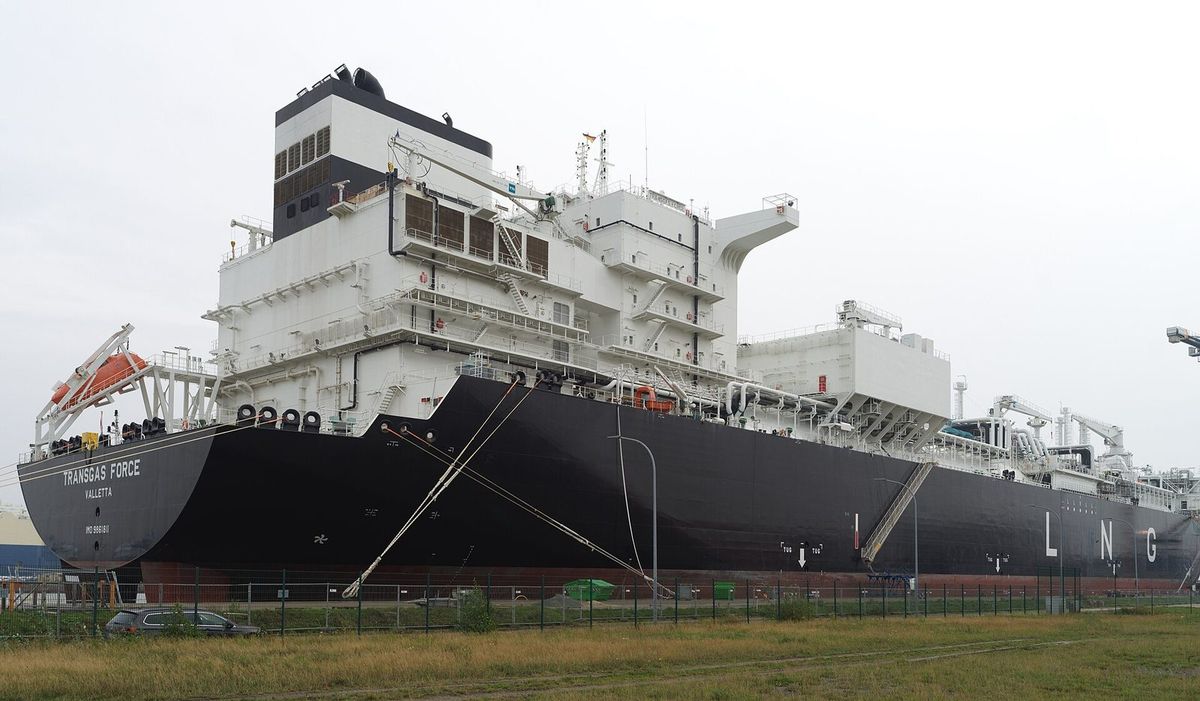
- Combined daily capacity charge for the two existing FSRUs (Excelerate + Summit) was reported at $454,000/day as of late 2020/2021 reporting (Excelerate ~$237,000/day, Summit ~$217,000/day) — a fixed cost owed regardless of whether the terminals move any gas that day. [C]
- Both terminals were themselves awarded via unsolicited BOOT (build-own-operate-transfer) proposals under the Special Provisions Act, not competitive tender — Excelerate's 2017 charter with Summit LNG Terminal Co. and Summit's own operating arrangement both trace to negotiated deals rather than open bidding. The proposed third FSRU (2024, also Summit) repeated the same unsolicited-award pattern and was priced at a $300,000/day-equivalent regasification fee before it was cancelled.
- Utilization/idle-capacity data: open sourcing did not yield a clean utilization-rate series for the two FSRUs (nameplate ~1,053–1,100 MMcfd combined vs. actual average throughput). The 2026 outage reporting (FSRUs offline for weeks at a time from fire, technical fault, and berthing failures) strongly implies utilization well below nameplate in the current year, but a quantified annual average was not found and should be flagged as a genuine data gap. [Blind spot — flagged rather than estimated]
- The Summit nexus is the clearest documented case of stacked-margin concentration: Summit Group (Chairman Muhammed Aziz Khan; Khan family 78%, Japan's JERA 22% — later reported to have relocated group HQ to Singapore) held one of the two original FSRU concessions, was separately awarded the unsolicited third-FSRU concession in March 2024, and separately held a supply-side SPA (June 2024, 1.5 Mtpa) — three simultaneous points of exposure to LNG-related state payments from one group, all three awarded without competitive process. A National Review Committee formed by the interim government in September 2024 to examine Special-Act-era power contracts found, across the portfolio it reviewed (not LNG-specific but structurally identical), "massive corruption, collusion, fraud, irregularities and illegalities," and separately calculated Bangladeshi consumers pay 25% more for electricity than regional peers (40% more excluding subsidy) despite a fourfold increase in generation capacity against an elevenfold increase in cost over 14 years — the power-sector analogue to the LNG capacity-payment question the original thesis asked to draw a parallel to. [C — committee findings widely reported; LNG-specific quantification of the same phenomenon is a genuine gap]
5. The award process and the interim government's review
- Legal mechanism: the Quick Enhancement of Electricity and Energy Supply (Special Provisions) Act, 2010, explicitly suspended the Public Procurement Act 2006 for energy-sector deals, permitted unsolicited proposals and direct negotiation, and granted broad legal immunity to officials involved — described by researchers as an "indemnity law." It was extended repeatedly through 2021 and remained in force until the interim government suspended new dealings under it (19 August 2024) and formally repealed it (November 2024).
- What was reviewed: the interim government formed a National Committee (5 September 2024) specifically to review power-sector contracts signed under the Special Act; it submitted an interim report in January 2026 and continued work through 2026, explicitly including the Adani Power PPA as its highest-profile target (found to be overcharging Bangladesh an estimated Tk 50–60 billion/year) and — per the committee's own framing — treating these as sovereign contracts that cannot be cancelled unilaterally without arbitration exposure, requiring a careful procedural-breach case rather than a blanket annulment. A separate Debapriya Bhattacharya-chaired White Paper Committee was tasked (September 2024) with evaluating energy-sector loan agreements from the Awami League period specifically.
- What was cancelled: over 30 renewable/gas projects including numerous unsolicited solar LoIs (~$6 billion notional) and the Summit third-FSRU/terminal deal. The government also began reviewing the terms of roughly 100 power plants, two existing FSRUs, and six long-term LNG import SPAs "inked over the past 14 years under the special law" — confirming that a formal LNG-specific contract review was mandated, though this research did not locate a published LNG-specific findings report (as distinct from the power-PPA-focused Adani findings) — flagged as a further blind spot and a natural next research target.
- What survived / reversed course: by mid-to-late 2026, reporting shows Summit actively lobbying for reinstatement of its cancelled terminal deal amid a broader "unsolicited deal playbook" reviving pattern — the interim government itself has been criticized (Business Standard/TBS, late 2025) for reverting to direct-procurement-method and G2G awards in ports and energy even while nominally committed to the Special Act's repeal, suggesting the procedural fix is partial and reversible rather than structural.
6. Precedents: what actually happened elsewhere, and what it implies for Bangladesh
| Case | Contract structure | What broke | Buyer's response | Lesson for Bangladesh |
|---|---|---|---|---|
| Pakistan, 2021–2022 | 15-year term SPAs with Eni and Gunvor | Suppliers, not the buyer, defaulted repeatedly (Eni: Jan 2021 half-cargo, Aug 2021, Nov 2021, Mar 2022; Gunvor: Nov 2021, Jan 2022, Mar 2022, then refused four further cargoes Apr–Jun 2022) as spot prices spiked far above contract levels, making delivery unprofitable for traders who could sell the same cargo spot instead | Pakistan LNG Ltd imposed a 30% take-or-pay-style penalty per defaulted cargo, pursued LCIA arbitration (claiming ~Rs 48 billion), and was forced onto emergency spot tenders at ~$25/MMBtu | The mirror image of Bangladesh's risk: a long-term contract only protects the buyer if the supplier's incentive to perform survives a price spike. Bangladesh's Qatar/Oman contracts are with state-linked NOCs (QatarEnergy, OQ/Oman state energy), which are structurally less likely to "trade away" a cargo than commercial intermediaries like Gunvor — a real mitigant the thesis should weigh, but Bangladesh's own 2025–2026 reporting of "several suppliers recently invoked force majeure amid geopolitical tensions and shipping disruptions" shows the risk is not zero even with NOC counterparties |
| India — GAIL/Petronet, multiple rounds 2015, 2016, 2017, 2018, 2024, 2026 | Long-term oil/Henry-Hub-indexed SPAs with RasGas/Qatar, Gazprom (Russia), ExxonMobil (Australia), Cheniere (US) | Nothing broke, in the sense of default — India proactively renegotiated price and take-or-pay terms downward by leveraging its position as a top-3 global LNG buyer, repeatedly, over a decade | 2015: Qatar cut price from ~$12–13 to ~$6–7/MMBtu, saved ~Rs 16,000 crore/$2.5bn, and Qatar waived a ~Rs 12,000 crore take-or-pay penalty in exchange for +1 Mtpa additional offtake; 2018: got Gazprom to switch indexation from JCC to Brent and defer volumes; Feb 2026: extended the Qatar deal 20 years at a lower price, saving an estimated $6 billion over the contract life by dropping the $0.52 fixed constant | This is the most directly actionable precedent. India's leverage came from (a) buyer scale, (b) a credible alternative-supply narrative, and (c) hardship/review clauses being actually invoked rather than left dormant. Bangladesh's Qatar-I contract has a nine-year price-review option — it is unclear from open sourcing whether Bangladesh has ever exercised it (a concrete, checkable action item) |
| Egypt, 2024 | Egypt swung from LNG exporter to importer as domestic gas production (Zohr field) declined faster than expected while summer power demand surged | Egypt had to charter FSRUs and sign emergency import deals (including with commodity traders) at short notice, at a structural disadvantage versus a buyer with pre-existing infrastructure and relationships | Egypt absorbed a large one-off subsidy/FX cost to buy emergency capacity and cargoes | Underscores the value of Bangladesh's existing FSRU infrastructure and NOC relationships as a genuine asset — but also shows how quickly "self-sufficient" gas positions can flip to import dependency, which is the same trajectory Bangladesh is on as domestic gas output declines against LNG import growth |
7. Renegotiation feasibility
- Review windows: the Qatar-I (RasGas) SPA carries an explicit nine-year price-review option (from a 2017 signing — meaning the window opened around 2026, i.e., now). Whether Bangladesh has exercised or plans to exercise it was not found in open reporting — this is the single most concrete, time-sensitive action item this research surfaces. [Flagged as urgent — verify with Petrobangla/Energy Division directly]
- Leverage Bangladesh actually holds: less than India's. Bangladesh is a far smaller buyer (single-digit Mtpa vs. India's 20+ Mtpa across multiple NOCs), has a weaker sovereign credit position (explicitly cited by S&P Global's Feb 2024 reporting as a headwind "weighing on price negotiations"), and depends on a narrower supplier base (effectively two NOC relationships plus newer Excelerate/OQ deals) — all of which cut against replicating India's playbook at India's scale.
- Illustrative value of a 1-percentage-point Brent-slope cut: at Brent ~$70–75/bbl (roughly $12–13/MMBtu-equivalent basis) and a combined long-term contract volume of roughly 6–7 Mtpa once all 2023-vintage SPAs are fully lifting (~280–330 million MMBtu/year), each 1-percentage-point reduction in the Brent slope is worth on the order of $35–45 million per year at current Brent levels — a back-of-envelope figure the research could not corroborate against a Petrobangla or IMF/World Bank sourced estimate and which should be treated as [T], method shown, not [E].
8. Early-warning dashboard
| Indicator | Source | Cadence | Latest confirmed print | Threshold / watch level |
|---|---|---|---|---|
| JKM spot vs. long-term contract-implied price | S&P Global Platts JKM assessment vs. Petrobangla-reported contract cost | Monthly | Spot reported as high as $21.58–$28/MMBtu (Apr 2025) and $24–28/MMBtu range (Aug–Sep 2026, post-Ras Laffan disruption reporting) vs. contract ~$9–11/MMBtu | Spread >$10/MMBtu sustained = active crisis signal |
| Petrobangla monthly/annual LNG import bill | Petrobangla / Finance Division / Business Standard reporting | Monthly–annual | ~$3.88bn for 2025 (109 cargoes); ~Tk 59,000 crore projected FY2025-26 | Rising >20% YoY without matching demand growth = red flag |
| FSRU outage days / effective utilization | Daily Star, TBS operational reporting | Event-driven | Multiple outages Jul–Aug 2026 (fire, technical fault, berthing failure) cutting supply from ~3,800 to <2,200 MMcfd demand-equivalent | >10 cumulative outage days/quarter = structural reliability failure |
| Take-or-pay / under-lift penalty exposure | Petrobangla SPA terms (as reconstructed here) | Annual | No penalty triggered in documented reporting; flex bands (10–50%) not yet breached per open sourcing | Any invoked take-or-pay penalty = signal contract floors are binding |
| Supplier payment arrears | Petrobangla finance director statements (TBS) | Monthly | Fell from $317.48m (Aug 2024) to $32–67m (Apr 2025) under interim-govt clearance push; re-widened per 2026 subsidy-shortfall reporting | >$200m outstanding = FX/liquidity stress signal |
| New SPA / terminal proposals | Energy Division, Petrobangla press statements | Event-driven | Summit seeking reinstatement of cancelled 3rd FSRU (as of Jul 2026); OQ short-term strip deal (Aug 2025) | Any unsolicited award without published tender = process-integrity flag |
| BERC gas tariff actions | Bangladesh Energy Regulatory Commission | Event-driven | Blended cost Tk 27.59/m³ vs. weighted avg selling price Tk 22.93/m³ (FY2025-26 estimate) — Tk 8.66 gap | Widening gap without tariff correction = growing subsidy liability |
| Load-shedding hours (LNG-supply linkage) | Power Division / Daily Star | Daily during crisis events | Extensive power cuts reported alongside Jul–Aug 2026 FSRU outages | Sustained load-shedding coincident with FSRU downtime = confirms transmission channel |
9. Blind spots and what a next pass should chase
- No public cargo-by-cargo Petrobangla ledger was located, so the monthly spread reconciliation (Section 2) is directional, not a verified cumulative dollar figure. This is the single highest-value primary document this research could not obtain.
- FSRU utilization rate (actual regasification vs. nameplate, annualized) is not published in a form this research located — needed to quantify the "paid for idle capacity" dollar figure the original brief asked for.
- Whether Bangladesh has exercised the Qatar-I nine-year price-review clause (window opened ~2026) is unconfirmed and time-sensitive; worth a direct query to Petrobangla/Energy Division.
- The Summit SPA-vs-terminal cancellation timeline has a reconciliation gap between sources (Section 1) that should be resolved against primary Petrobangla correspondence.
- A power-sector-style quantified overcharge finding specific to LNG (analogous to the Adani Tk 50–60bn/year figure for power) was not found in open sourcing — the National Review Committee's LNG-specific findings, if published, would be the highest-value single document for confirming or overturning the extraction thesis at the pricing (not just process) level.
- The March 2026 Ras Laffan attack and associated force majeure referenced in current LNG price-index sourcing is very recent, post-dates this analyst's reliable training-data cutoff, and should be independently verified against primary Qatari/S&P Global reporting before being treated as established fact in any downstream product — it is included here because multiple pricing-data sources referenced it consistently, but it carries a lower confidence tag than the rest of this report. [S/T — flagged]
10. Source discipline note
Historical JKM series in this report are triangulated from a mix of S&P Global Platts-sourced news reporting (higher reliability, tied to specific dated events) and commercial LNG price-tracking sites of variable and in some cases unclear methodology (lower reliability, especially for exact historical daily/monthly values). Where a specific dollar figure could not be tied to a named, dated primary or wire-service source, it has been presented as a range or explicitly tagged [T]/[S] rather than stated as fact. Two outlets (e.g., TBS and Financial Express) frequently republish the same underlying Petrobangla official statement — this has been treated as syndication, not independent corroboration, throughout.
Compiled from open-source reporting (Reuters, S&P Global Commodity Insights/Platts, The Business Standard, The Financial Express, The Daily Star, Natural Gas World, New Age, Business Standard India, Dawn, The News (Pakistan), CPD/ACE working papers, and Wikipedia infobox data for corporate ownership) via live web research, September 2026. No primary SPA text, tender notice, or board-approval document was directly obtained; all [E]-tier tags above refer to on-the-record official statements or statutory text, not leaked contract documents.