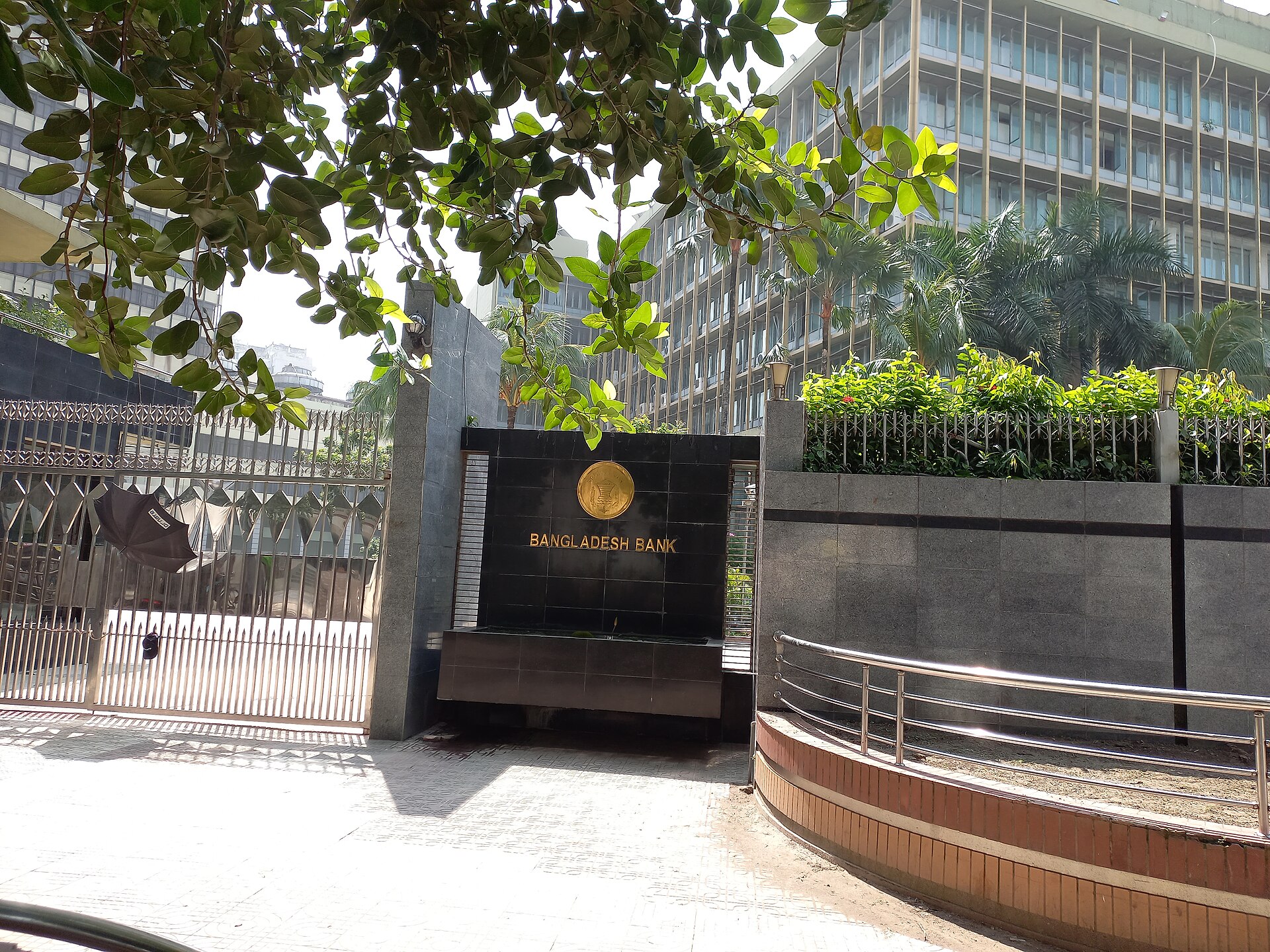
Bangladesh Bank held its key policy rate at 9.5 percent on September 30, in its maiden Quarterly Monetary Policy Statement, and attached a warning to the hold: a Tk20-a-litre fuel price hike and a partial new national pay scale threaten to push transport and production costs back up. Headline inflation cooled to 8.26 percent in August, a 10-month low, but the central bank is not treating it as a turn.
A warning in two parts
The first is fuel. Administered prices were raised Tk20 per litre across all fuel oils earlier this month, and the increase is already rippling through freight and energy expenses for manufacturers, agricultural producers, and logistics networks. The central bank's language is direct: higher fuel prices are likely to raise transport and production costs. Global fuel price increases and disruptions in the Strait of Hormuz sit behind the same line.
The second is pay. Partial implementation of the new national pay scale, the statement says, could add further inflationary and fiscal pressures. The composition of August inflation explains the caution: food inflation moderated to 7.02 percent, but non-food inflation ran at 9.32 percent, and higher transportation tariffs have yet to take full effect. The bank's fear is that two administered shocks land on an economy where underlying price pressure never really left.
Rate held, governor absent
The numbers themselves did not move. The repo rate stays at 9.5 percent, the Standing Lending Facility at 11 percent, and the Standing Deposit Facility at 7.5 percent. The decision came out of the 14th Monetary Policy Committee meeting on September 23, framed as a response to ongoing domestic and external volatility.
The messenger is worth noting. Deputy Governor Habibur Rahman presented the statement at the central bank headquarters; Governor Mostaqur Rahman was absent from the briefing and took no questions. This is the second monetary policy framework of his tenure since he took office in February. The government's own target is to bring inflation down to 7.5 percent by the close of the fiscal year, which leaves the bank defending a narrow path: hold too long and growth suffocates, ease too early and expectations reset upward. The statement warns explicitly that premature easing could raise inflation expectations and delay the return of inflation to the target range. A 50-basis-point cut in early August has barely transmitted to the real economy.
Growth is the other half of the bind
Real GDP growth is estimated at 4.14 percent for FY2025-26, with third-quarter growth at just 2.2 percent and industrial production contracting 0.28 percent in the period. High financing costs, energy shortages, infrastructure constraints, and demand uncertainty are all named as drags. The statement acknowledges a Tk60,000 crore stimulus package, including Tk20,000 crore to reopen closed factories, as the expected support for recovery, then adds the sentence that matters: monetary policy alone cannot address the supply-side constraints weighing on growth.
Credit tells the same story from the banks' side. Private-sector credit growth stood at 4.75 percent in August, reflecting weak investment demand and borrower risk, while the sector's non-performing loan ratio rose to 32.78 percent in June. The central bank tied the two together and prescribed bank restructuring, stronger governance, capital restoration, and improved credit discipline.
The external account offers partial relief. Remittance inflows rose 18.9 percent in the first two months of FY27, and a relatively stable exchange rate helped contain imported inflation. The balance of payments ran a $6.6 billion surplus in FY26 but turned negative in the first two months of FY27 on a financial-account deficit. Forecasters are split on what comes next: the World Bank projects 4.6 percent growth for FY27, while the IMF has cut its forecast to 3.5 percent from 4.3 percent.
What would change the read
Three markers carry the story forward. First, the October inflation print: if the fuel pass-through shows up in transport costs without lifting the headline far, the bank's caution looks vindicated rather than excessive. Second, the pay scale: partial implementation is the phrase doing the work, and its pace decides whether the fiscal pressure the bank fears actually arrives. Third, the January statement: another hold would confirm that the bank sees the 7.5 percent target slipping, while a cut would mean it believes the shocks were absorbed.
Stated so they can be proven wrong: the warning dissolves if non-food inflation falls toward 7 percent by December; it hardens if transport costs push the headline back above 9 percent.
Sources
- The Business Standard, "New pay scale, fuel prices compound inflation risks: Bangladesh Bank," 30 Sep 2026.
- bdnews24, "Civil service pay rises risk driving up inflation, Bangladesh Bank warns," 1 Oct 2026.