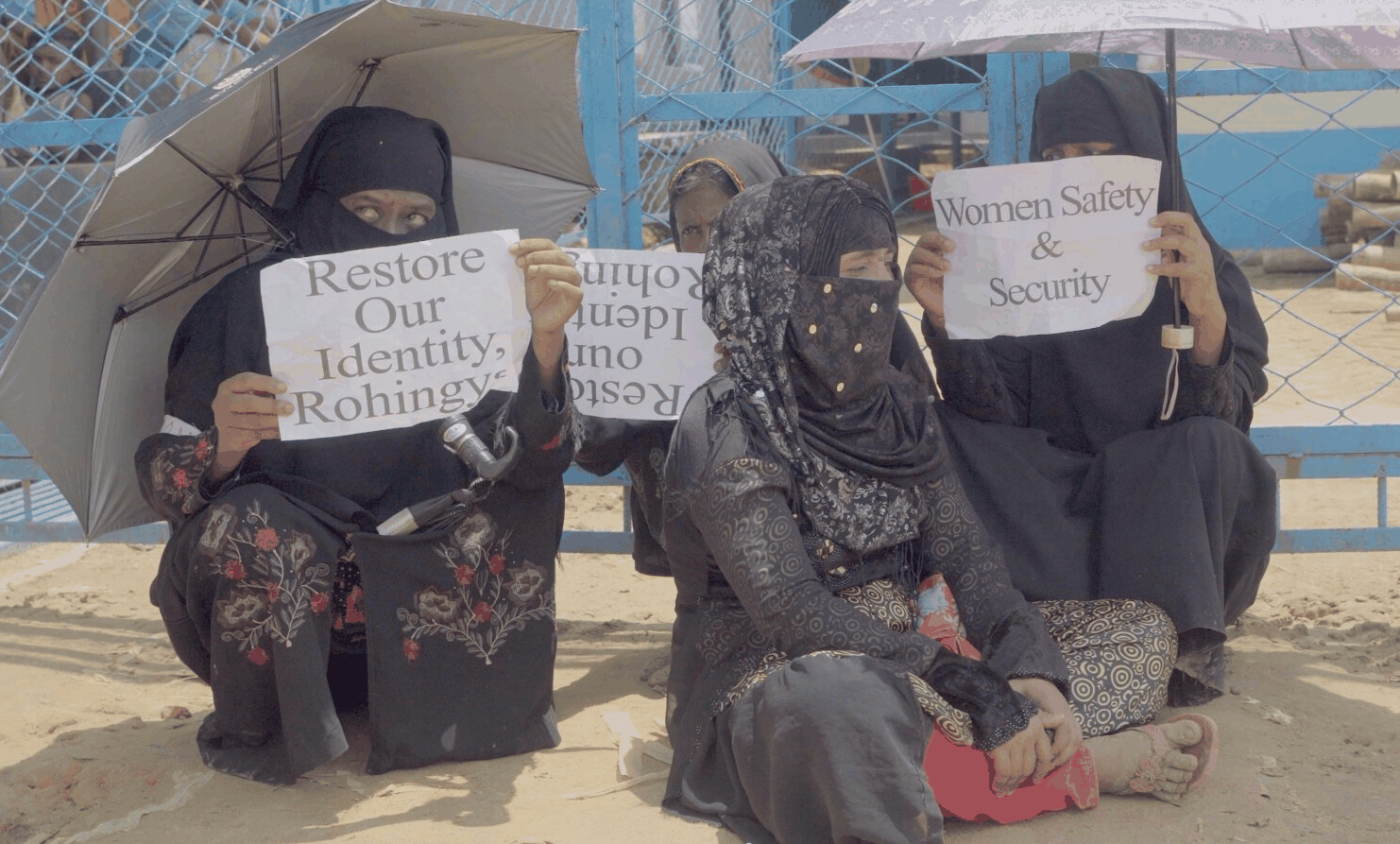
Tarique Rahman tabled a five-point proposal for the Rohingya crisis at a high-level side event on 23 September at UN headquarters, co-convened by Bangladesh and The Gambia under the banner "Justice and Accountability." His framing: "The time has come to move from empathy to a search for root causes and their solutions, from promises to action and from managing displacement to ending it." Bangladesh shelters more than 1.2 million Rohingya, nine years after the 2017 crackdown.
The five points
- A clear and credible roadmap, set by international and regional stakeholders, for the early, safe, voluntary, dignified and sustainable repatriation of the Rohingya to Myanmar.
- An end to violence against civilians in Myanmar, including the Rohingya, with their fundamental rights and security guaranteed as the condition for restoring refugees' confidence in return.
- Adequate and predictable humanitarian assistance for the Rohingya and the host communities in Bangladesh, whose development needs cannot be overlooked because the crisis has dragged on.
- Cooperation with the international justice and investigation system to ensure justice and accountability, including the genocide case The Gambia brought against Myanmar at the ICJ.
- Stronger international and regional cooperation against cross-border crime flowing from the camps: drug trafficking, human trafficking, digital fraud and illegal arms.
The ledger behind the plan
The numbers Rahman attached to the ask: over 1.2 million Rohingya sheltered in Bangladesh, with thousands of new arrivals still fleeing Myanmar's ongoing violence and, per the UN Secretary-General's Special Envoy on Myanmar Julie Bishop, an estimated 30,000 children born in the camps each year. UNHCR chief Barham Salih, a keynote speaker at the event, warned that "when funding disappears, needs do not disappear with it," pointing to less food, less education and more desperation for families. UNGA President Khalilur Rahman said the international community must not allow attention to fade, and that Rohingya need a meaningful voice in shaping the conditions for their return.
"Humanitarian generosity cannot become an excuse for political inaction. Nor can Bangladesh be expected to shoulder this responsibility indefinitely."
Rahman recalled the earlier Rohingya influxes of 1978 and the 1980s, when repatriations took place under governments led by his father Ziaur Rahman and his mother Khaleda Zia. The crisis deepened after the 2017 violence. His closing line at the event: "The crisis originated in Myanmar; its solution lies in Myanmar." The measurable commitment in the five points is the first one: a credible repatriation roadmap with conditions created inside Myanmar. Everything else in the plan is either aid to keep the camps survivable or law enforcement against the crimes the camps generate. Whether the roadmap appears, and who writes it, is the part to watch.
Sources
- Views Bangladesh, "Five urgent proposals of PM for resolving Rohingya crisis," 23 Sep 2026. viewsbangladesh.com
- Bay of Bengal Post, "Bangladesh PM Tarique Rahman proposes five urgent measures to resolve Rohingya crisis at UNGA," 24 Sep 2026. bayofbengalpost.com
- Daily Waadaa, "'Humanitarian generosity cannot become an excuse for political inaction': PM Tarique on Rohingya crisis at UNGA," 23 Sep 2026. dailywaadaa.com
- TBS News, "Rohingyas: UNGA President says global community must not allow attention to fade," 24 Sep 2026. tbsnews.net